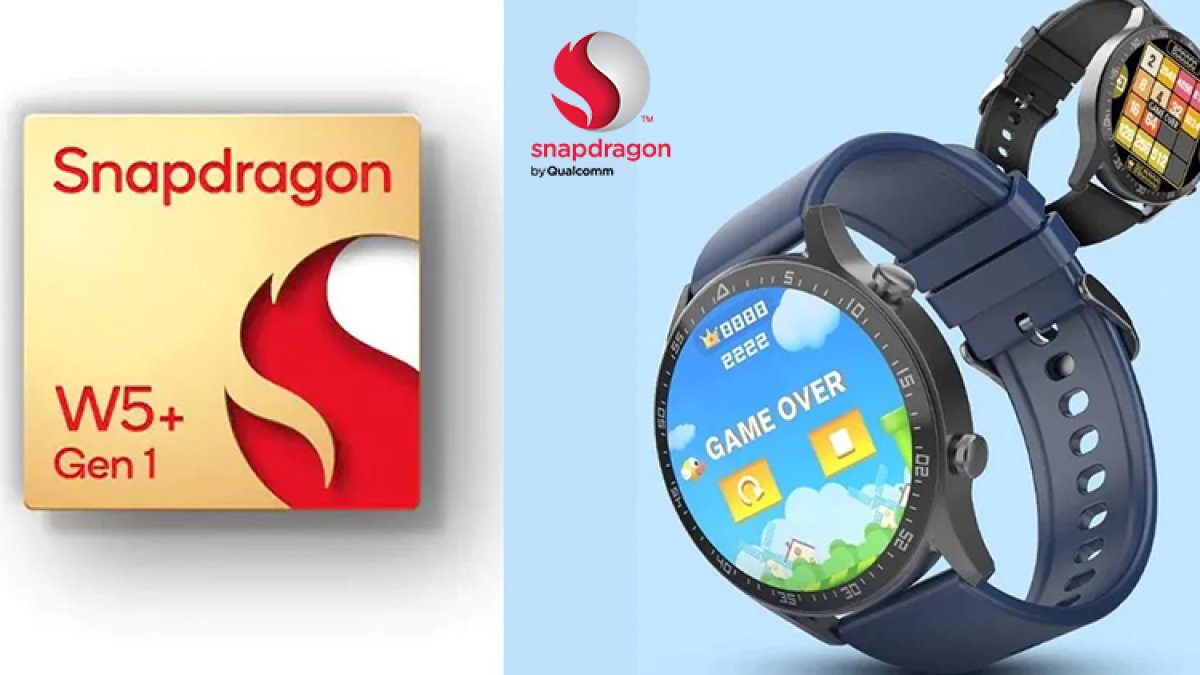
Qualcomm has officially launched the Snapdragon W5 Gen 1 and Snapdragon W5+ Gen 1, two next-generation chipsets designed to power the next wave of flagship smartwatches and wearable devices. Built on a cutting-edge 4nm process node, these chips promise to halve power consumption, double performance, and pack in twice the features compared to the previous generation.
Snapdragon W5 Gen 1: What Makes It a Wearable Game-Changer
The Snapdragon W5 Gen 1 and its premium sibling, the Snapdragon W5+ Gen 1, are engineered around a hybrid architecture that pairs a 4nm main SoC with a power-sipping 22nm always-on co-processor. This pairing is central to Qualcomm's promise of longer battery life without sacrificing performance. Both chips also ship with support for ultra-low-power Bluetooth 5.3, ensuring seamless and energy-efficient wireless connectivity for wearables.
Beyond raw performance, Qualcomm has shrunk the physical footprint of these chipsets by 30 percent compared to earlier designs, making them thinner and more compact. That size reduction matters greatly in smartwatch design, where every millimetre of board space affects how slim and lightweight the final product can be.
Advanced Power Modes and Battery Life Benefits
One of the headline engineering achievements in the Snapdragon W5 Gen 1 lineup is the introduction of new Deep Sleep and Hibernate modes. These low-power states allow a smartwatch to dramatically reduce energy draw when the device is idle, extending battery life throughout the day and night.
Qualcomm has also designed low-power islands for Wi-Fi, positioning (GPS), and audio subsystems. Each subsystem can operate independently at minimal power draw, meaning activities like continuous heart-rate monitoring, step tracking, or music playback do not need to wake the entire SoC. This architecture is a meaningful step forward for always-on health and fitness wearables.
Reference Designs and Early Adopter Brands
To accelerate adoption, Qualcomm introduced reference designs in partnership with Compal and Pegatron. These ready-made hardware blueprints make it easier and faster for consumer electronics brands to build finished products around the new chipsets, reducing time-to-market and design risk.
Two brands have already committed to being first to market. Oppo will launch the Watch 3 series powered by these new chipsets, with the announcement expected in August. Mobvoi is also set to debut a next-generation TicWatch flagship smartwatch running Snapdragon W5 Gen 1 or W5+ Gen 1 hardware, also slated to arrive within the same year.
Qualcomm reports that as many as 25 product designs based on the Snapdragon W5 series are currently in development across various brands, signalling broad industry confidence in the platform.
Snapdragon W5 vs W5+: Key Differences
Both chips share the same 4nm plus 22nm hybrid architecture, Bluetooth 5.3 support, and power-management features. The primary differentiator is positioning in the product tier. The Snapdragon W5+ Gen 1 targets premium flagship smartwatches that demand maximum processing headroom, while the standard Snapdragon W5 Gen 1 is aimed at high-performance mainstream wearables. Brands can select the appropriate tier based on target price point and capability requirements.
Industry Impact and What to Expect
The launch of the Snapdragon W5 series represents one of the most significant leaps in wearable silicon in recent years. By combining a modern 4nm fabrication process with dedicated always-on co-processor logic and granular power islands, Qualcomm is addressing the two biggest complaints in the smartwatch segment: battery life and processing speed.
For consumers, the practical outcome will be smartwatches that last longer on a single charge, respond faster to interactions, and handle more demanding health-tracking workloads — all in slimmer, lighter form factors. With Oppo, Mobvoi, and 23 additional brands preparing devices, the Snapdragon W5 Gen 1 platform is poised to become the defining wearable chipset of the next product cycle.
Stay updated on all the latest wearable chip announcements and smartwatch launches by browsing our brand coverage.