The Samsung Galaxy Book Go is a budget laptop aimed squarely at students, and at a starting price of Rs 32,990 it brings a surprisingly premium feel to a segment often dominated by plasticky, uninspiring machines. But does the long battery life and slim build justify the price? Here is everything you need to know.
Samsung Galaxy Book Go Design and Display
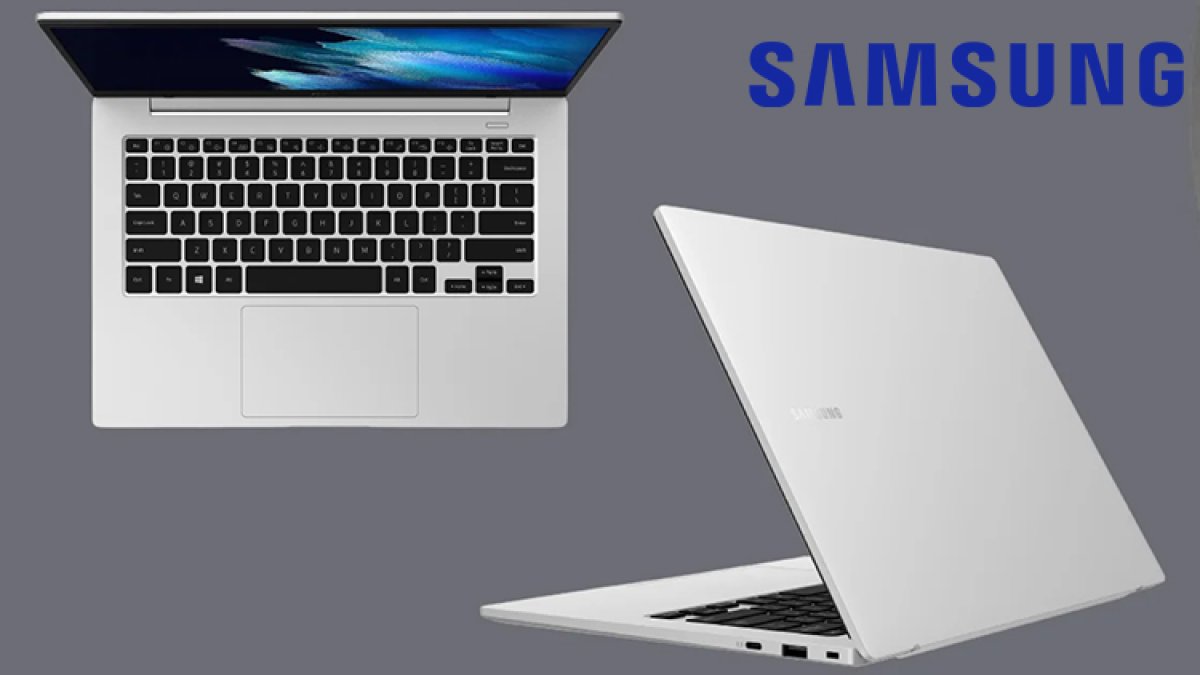
The Galaxy Book Go arrives in a Silver finish with Black keys — a combination that immediately draws comparisons to Apple's MacBook lineup. The chassis is plastic, yet Samsung has done an excellent job disguising the material: the surface texture feels firm and the overall build inspires confidence. At just 1.38 kg, it is one of the lightest laptops in its class, making it easy to slip into a school bag or backpack.
The laptop carries a US Military Standard (MIL-STD-810G) certification, meaning it has been tested for resistance to thermal shocks, vibration, and humidity. For students who move between classrooms or work in varied environments, that kind of durability is a genuine plus.
On the hinge side, the Galaxy Book Go opens a full 180 degrees, which reduces stress on the joint and lowers the risk of cracking over time. When you tilt it past 90 degrees, the rear of the laptop lifts slightly — a design choice that improves airflow and typing angle at the same time.
The 14.0-inch FHD LED display runs at 1920 x 1080 resolution. Colours are rich and the panel is bright enough for everyday indoor work, though direct sunlight use may require you to crank the brightness to its limit. Dolby Atmos audio support is included, and the 1.5W stereo speakers sitting at the bottom of the chassis deliver decent, if not spectacular, sound. Headphones are recommended for anything beyond casual listening.
Performance and Battery Life
Under the hood the Galaxy Book Go is powered by a Qualcomm Snapdragon 7c Gen 2 (Kryo 468 Octa-core CPU) paired with a Qualcomm Adreno GPU, running Windows 11 Home. The base configuration ships with 4 GB RAM and 128 GB storage. The processor boots the machine in a matter of seconds and handles everyday tasks — browsing, document editing, video calls, and light multitasking — without hesitation. Apps open quickly and navigation through Windows 11 feels smooth throughout.
Where the Snapdragon 7c Gen 2 shines is in efficiency. Samsung's ARM-based implementation keeps power draw low, which pays off handsomely in real-world battery tests. In our experience, the 42.3 Wh battery lasted 9 to 10 hours on a full charge, covering a full school or work day with ease. Charging is handled via a bundled 25W USB Type-C charger that is included in the box; a full recharge takes approximately 3 hours.
The only area where performance can feel constrained is heavy multitasking. As you open more browser tabs or run multiple applications simultaneously, the 4 GB RAM starts to show its limits. Samsung would do students an even greater service by offering a 6 GB RAM variant at a slightly higher price point.
The touchpad is responsive and accurate, requiring no recalibration out of the box. The keyboard layout is comfortable and the key travel adequate for long typing sessions.
Connectivity and Ports
- Right side: USB Type-C, USB 2.0, Security Slot
- Left side: USB Type-C, 3.5 mm headphone/microphone combo jack, Micro SD card slot
Notably absent is an HDMI port, which will require an adapter if you need to connect to a projector or external monitor. That is a real inconvenience in a classroom or conference room setting.
Samsung Ecosystem Integration
The Galaxy Book Go supports Samsung's broader device ecosystem. You can pair Samsung earbuds directly, mirror or extend the screen to a Samsung Galaxy Tab, and share content wirelessly between two Samsung laptops. For students already invested in Samsung's ecosystem, this seamless interoperability is a notable convenience.
For more Samsung laptops and accessories, visit the Samsung brand page.
Should You Buy the Samsung Galaxy Book Go?
At Rs 32,990 for the 4 GB + 128 GB variant, the Galaxy Book Go sits in a competitive spot. Its standout strengths are the slim, military-grade build, the vibrant 14-inch FHD display, and the exceptional battery life that comfortably reaches 9–10 hours. The Snapdragon 7c Gen 2 handles everyday productivity without fuss, and the Windows 11 Home experience is smooth.
The primary trade-off is the 4 GB RAM ceiling, which limits future-proofing, and the missing HDMI port. If you can accept those constraints — or plan to use USB-C adapters — this is a well-rounded, lightweight laptop that will serve most students admirably throughout the academic year.