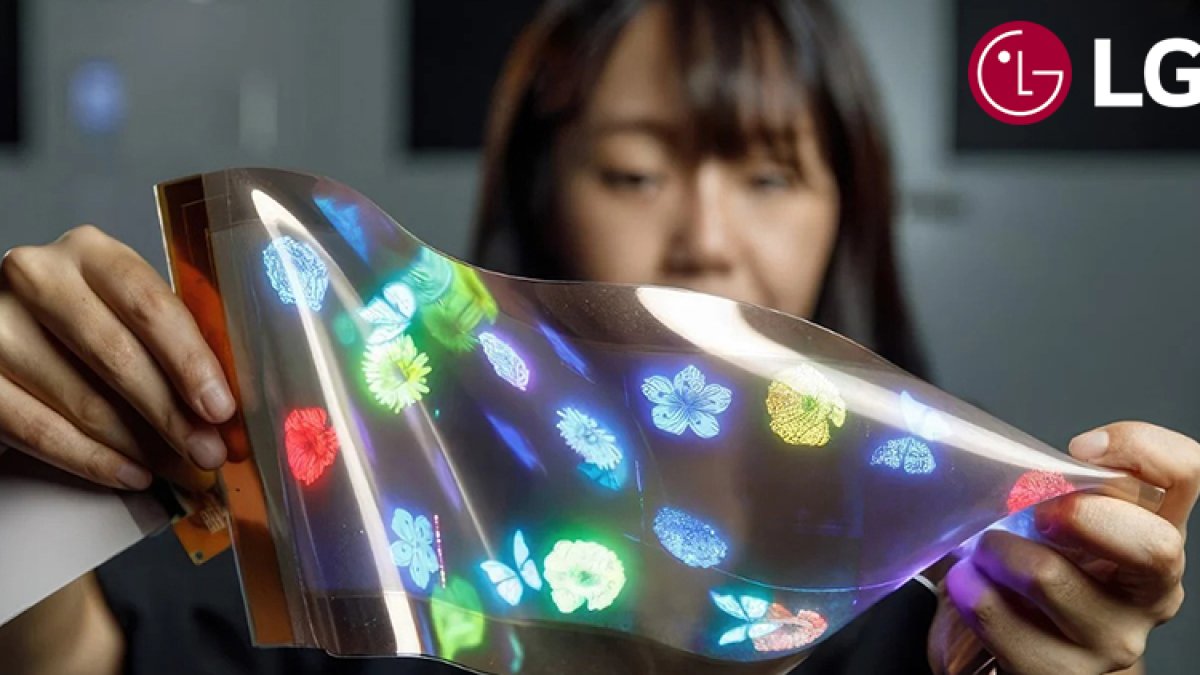
LG introduced stretchable display technology that pushes the boundaries of what we know about flexible screens. While foldable phones have dominated headlines, LG's latest prototype is an entirely different beast — a display that stretches like rubber, expanding from 12 inches all the way to 18 inches.
- LG's stretchable display prototype expands 50% — from 12 inches to 18 inches — while maintaining 100 pixels per inch resolution and full RGB color.
- The display is built on a silicon substrate (used in contact lenses) and uses micro-LEDs connected by S-shaped springs, allowing it to survive over 10,000 stretch cycles.
LG Introduced Stretchable Display: What Makes It Different
LG Display has described this as the company's "ultimate display technology," and it's easy to see why. Unlike the foldable displays we've seen in smartphones, which simply bend along a single crease, this prototype physically stretches in any direction — like a piece of rubber — without any permanent deformation. When released, it snaps back to its original 12-inch size without damage.
The key technical achievement is maintaining image quality during stretching. Even at full 18-inch extension, the panel holds a resolution of 100 pixels per inch (ppi) and renders full RGB color. LG first revealed a version of this technology back in 2020, when it could only stretch by 20 percent. At that time, the company noted the panel's quality was comparable to a 40-inch 4K TV in terms of pixel density. The current prototype has now advanced to 50 percent stretchability — a significant leap forward.
Engineering Behind the Stretch: Silicon Substrate and Micro-LED Springs
The engineering that makes this possible is genuinely novel. LG Display built the panel on a special silicon substrate — the same type of material used to manufacture contact lenses — which gives the base layer its elastic properties. Rather than connecting the display's light sources with rigid wires, the company uses S-shaped springs to link each micro-LED. These spring-shaped connectors flex and extend as the display is pulled, preventing the electrical connections from snapping under tension.
Micro-LED Light Source
Each micro-LED light source measures just 40 micrometers across. At that scale, the LEDs are small enough to sit on the flexible substrate without creating stiff zones, and the S-shaped spring connections keep them powered even at maximum stretch. LG Display states the panel can withstand repeated stretching up to 10,000 times without degradation, and it is also engineered to survive extreme temperatures and external shocks.
Potential Applications Across Industries
LG Display sees this technology reaching well beyond consumer electronics. The company has specifically highlighted potential use cases in fashion, wearables, mobility, and gaming. It has also pointed to the automotive and aviation industries as promising sectors — think displays that wrap around curved dashboards or conform to the interior surfaces of an aircraft cabin. For wearable technology in particular, a display that stretches with the body rather than sitting rigid against it could open up entirely new product categories. Explore more innovations from LG on GadgetsNews101.
Frequently Asked Questions
How far can LG's stretchable display expand?
The current prototype starts at 12 inches and can be stretched up to 18 inches, representing a 50 percent increase in size. When the stretching force is removed, the display returns to its original 12-inch dimensions without any damage.
Does the display lose image quality when stretched?
No. LG Display states that the prototype maintains a resolution of 100 pixels per inch and full RGB color reproduction even at its maximum 18-inch stretch. This makes it one of the few flexible display technologies that preserves image fidelity throughout its full range of motion.