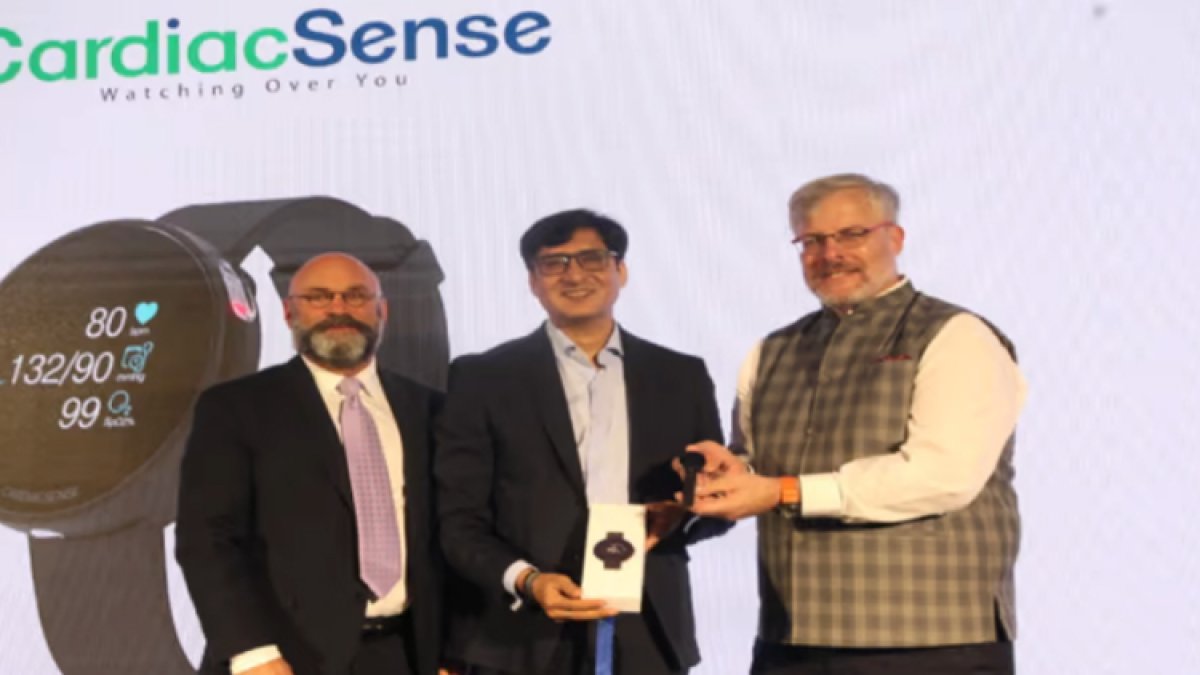
Xplore Lifestyle has unveiled the CardiacSense, a medical grade smartwatch that holds the distinction of being the world's first wearable to earn full medical certification for irregular heart rate monitoring. Developed in partnership with an Israeli medical technology company, the device is certified under European Union MDR and CE 2797 standards, setting a new benchmark for clinical-grade wearables.
What Makes the CardiacSense a Medical Grade Smartwatch
The CardiacSense is built around a patented bio-sensing opto-mechanical sensor that tracks individual heartbeats in real time. Advanced artifact sensors work alongside it to filter out noise and motion interference, ensuring the data captured is clinically meaningful rather than merely indicative.
Its primary clinical target is atrial fibrillation (AFib), a life-threatening cardiac arrhythmia that accounts for approximately 70% of stroke incidents worldwide. The device detects not just AFib but any abnormal or irregular heartbeat pattern, giving clinicians and patients early warning of a potentially dangerous condition.
During trials assessed against US FDA benchmarks, the CardiacSense exceeded every required threshold. It recorded a false detection rate (FDR) of just 0.6%, well below the FDA-mandated ceiling of 2%, and delivered more than 99% accuracy across all monitored parameters. These figures are notable even by dedicated medical device standards, making the CardiacSense credible in clinical environments.
Continuous Monitoring for Chronic Conditions
Beyond arrhythmia detection, the CardiacSense is designed to provide continuous, long-term monitoring for patients managing chronic conditions. The device supports monitoring for:
- High blood pressure — enabling non-invasive, around-the-clock tracking
- Chronic heart failure (CHF) — helping clinicians catch deterioration early
- Chronic obstructive pulmonary disease (COPD) — monitoring respiratory-related cardiac stress
- Sleep apnea — detecting nocturnal irregularities that standard check-ups miss
One of the standout capabilities is remote ECG testing. Physicians can request and review a patient's ECG results directly from their clinic without the patient being physically present. This remote-diagnostic feature could reduce unnecessary hospital visits while maintaining continuous clinical oversight, a meaningful advantage for elderly or mobility-limited patients.
Certification and Regulatory Credentials
Medical wearables occupy a grey zone between consumer electronics and regulated medical devices. The CardiacSense resolves that ambiguity clearly: it is medically recognized and carries EU MDR (Medical Device Regulation) and CE 2797 certification. These are among the most stringent medical device standards globally, requiring clinical evidence of safety and effectiveness before approval.
The US FDA trial performance further reinforces its credibility. Passing all FDA-set thresholds during trials means the CardiacSense could pursue US market clearance, opening the door to deployment in American healthcare systems. Xplore Lifestyle has not yet confirmed a formal US FDA submission, but the trial data positions the device favorably for that pathway.
Availability and Pricing
Xplore Lifestyle has stated that information on pricing and availability will be announced in September. No specific retail price has been disclosed ahead of that date. Given the device's medical-grade positioning and certification overhead, pricing is likely to sit above mainstream consumer smartwatches.
For those interested in exploring more wearable and smart device launches, visit the Gadgets section for the latest coverage.